
individual therapy

Therapy isn't about becoming someone different.
It's about developing a different relationship with yourself.
Many people come to therapy hoping to feel less anxious, less overwhelmed, or less stuck. They want the overthinking to stop, the emotions to feel more manageable, or the same patterns to finally change.
Those are understandable hopes. But I've found that lasting change rarely comes from trying harder to manage yourself.
Instead, we begin by slowing down.
Together, we'll create space to understand what's happening beneath the surface—not just in your thoughts, but in your emotions, your body, your relationships, and the ways you've learned to protect yourself. Because nothing about you happened by accident.
The way you've learned to move through the world makes sense.
Many of the people I work with learned early how to stay capable, thoughtful, helpful, or composed because it mattered. Those ways of moving through the world weren't flaws. They were intelligent adaptations that helped you stay connected, safe, or accepted.
But over time, what once protected you can begin to feel limiting.
You may find yourself overthinking instead of feeling. Caring for everyone else while losing sight of yourself. Holding everything together on the outside while feeling disconnected on the inside.
I don't see these patterns as problems to get rid of. I see them as invitations to become curious about what they've been trying to protect.
When those patterns are met with understanding instead of judgment, something begins to soften. You no longer have to spend so much energy managing yourself. There becomes more room to feel, to rest, and to live with greater freedom.
What therapy with me looks like
Our work is collaborative, relational, and paced with care. I'll bring warmth, curiosity, honesty, and, when it helps, a bit of humor.
Together, we might:
Slow down enough to notice what's happening inside instead of immediately trying to make sense of it.
Become curious about the patterns that keep you overthinking, people-pleasing, withdrawing, or staying in control.
Build a more trusting relationship with your emotions rather than fighting or fearing them.
Practice staying present with yourself through discomfort instead of turning away from it.
Create more space to respond from intention instead of protection.
My hope isn't that you leave therapy having learned to manage yourself better. It's that you leave feeling more connected to yourself, more at home in your own life, and more able to bring your full self into the relationships that matter most.
A note about my approach
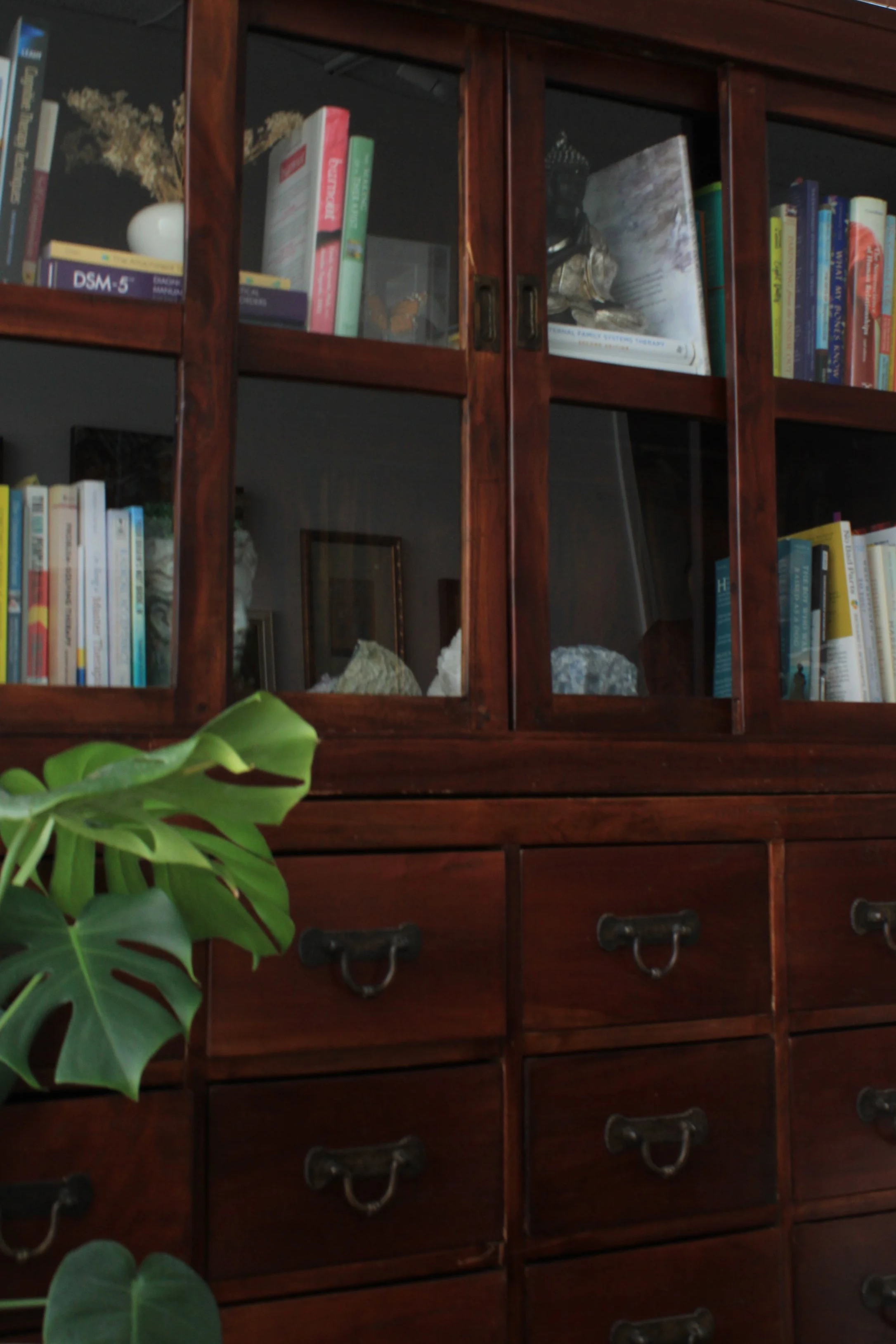
My work is informed by Internal Family Systems (IFS), attachment theory, general systems theory, and a strong focus on the connection between mind and body.
More than any one model, I'm interested in what helps you stay in relationship with yourself.
Sometimes that means working directly with different parts of your experience. Sometimes it means slowing down enough to notice what your body has been communicating all along. Sometimes it means stepping back to understand the relationships and experiences that shaped the way you move through the world.
The approach isn't fixed. It's responsive to you.
What stays consistent is the relationship we build together—a space where you don't have to perform, have the right words, or figure everything out before you arrive. I believe meaningful change happens when we're met with curiosity instead of judgment, and when we no longer have to navigate our inner world alone.
Explore areas I commonly work with
No two people arrive in therapy for the same reason. While the heart of my work remains the same, each person's story deserves its own conversation.
Explore some of the areas I commonly work with below to find the page that feels most like your experience.
-
You spend your days holding space for other people. This is a place where you get to put down the role, reconnect with yourself, and remember that you're a person before you're a therapist.
-
Somewhere along the way, staying connected may have started meaning staying small, agreeable, or responsible for everyone else. Therapy creates space to build relationships where you don't have to lose yourself in order to belong.
-
When Emotions Feel Like Too Much.
If you've spent years trying to control, suppress, or outthink your emotions, it can be hard to know what it means to truly move through them. Therapy helps you build a different relationship with your emotions—one rooted in curiosity, compassion, and trust instead of fear.
let’s talk

Let’s set up a phone call so you can get a feel for who I am. Fill out the form and I’ll reach out shortly to get it scheduled! It’s 100% free of charge to help us start off from the right place.